Definition, Benefits & strategies of online and offline digital marketing
Digital marketing is not limited to the internet only. It includes online digital marketing (such as websites, social media, and Google ads) and offline digital marketing (such as TV, radio, banners, and SMS). Both methods help businesses reach customers, build brand awareness, and increase sales.
Understanding the definition, strategies, benefits, and differences between online and offline digital marketing helps businesses choose the right marketing approach. When used together, they create a powerful and effective marketing strategy.
| Overview | Short Description |
|---|---|
| Online and Offline Digital Marketing | Both types of marketing help you clearly understand their strategies, benefits, and how they differ from each other. |
| Online Digital Marketing | Promoting brands through websites, social media, SEO, and online ads to reach and attract audiences worldwide. |
| Offline Digital Marketing | Promoting products through TV, radio, newspapers, banners, and other offline media to reach and connect with local customers. |
| Online and Offline Digital Marketing Strategies | Key strategies include reaching the right audience, using SEO and content marketing, and applying offline promotions to create a strong local impact. |
| Benefits of Online Marketing | It is cost-effective, offers global reach, builds brand trust, provides instant feedback, and helps increase website traffic. |
| Benefits of Offline Marketing | Effective for local audiences, it offers immediate product access, creates emotional engagement, and is widely trusted by traditional users. |
| Online and Offline Digital Marketing Cost Comparison | Online marketing is low to medium cost and flexible; offline marketing is higher cost with a limited reach but a strong local presence. |
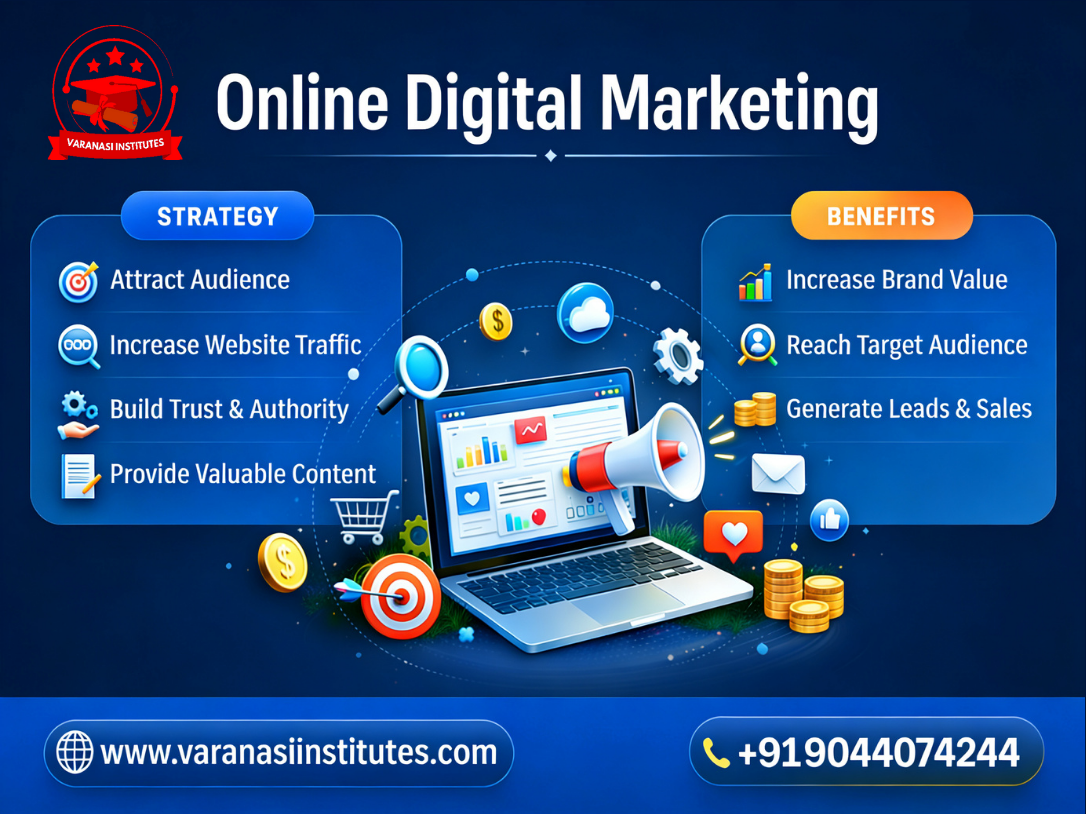
What is Online Digital Marketing?
Online digital marketing is the process of promoting products or services using the internet. It involves platforms such as websites, search engines, social media, email, and online advertising.
This type of marketing allows businesses to reach a global audience, communicate quickly, and track performance in real time. Online digital marketing is cost-effective, flexible, and suitable for businesses of all sizes.
Examples of Online Digital Marketing
- Search Engine Optimization (SEO)
- Google Ads and paid search advertising
- Social media marketing (Facebook, Instagram, YouTube)
- Email marketing
- Content marketing (blogs, videos, infographics)
Strategies of Online Digital Marketing
Effective online digital marketing strategies focus on reaching the right audience at the right time:
- SEO (Search Engine Optimization): Improves website visibility on search engines
- Social Media Marketing: Engages users and builds brand awareness
- Content Marketing: Builds trust through valuable and informative content
- Email Marketing: Maintains direct communication with customers
- Paid Advertising: Generates fast traffic and quality leads
Performance can be measured using analytics tools, allowing continuous improvement of campaigns.
Read also: –Digital Marketing Course Syllabus in Varanasi Institutes
Benefits of Online Digital Marketing
- Global reach at a low cost
- Real-time performance tracking
- Direct interaction with customers
- Higher brand visibility and trust
- Increased website traffic and sales
- Flexible budgets and easy campaign updates
More details: – Digital Marketing: Course Details, Fees, Syllabus & Career Opportunities
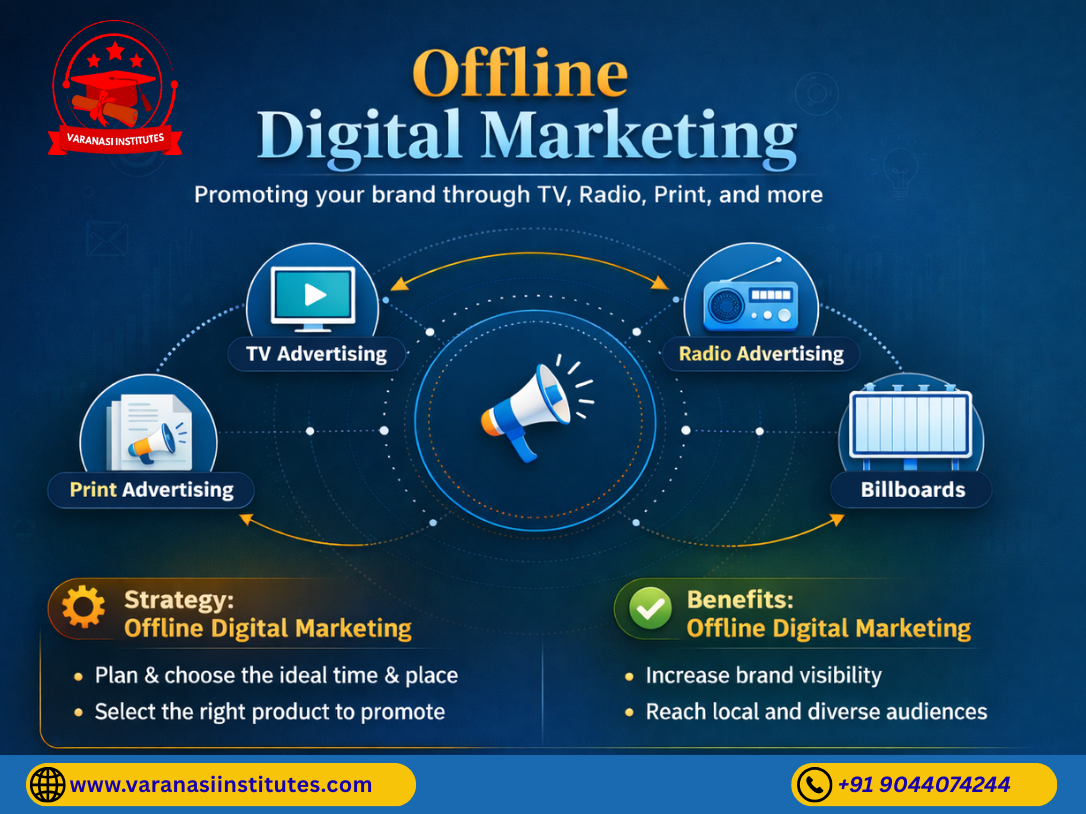
What is offline digital marketing?
Offline digital marketing refers to promoting products or services using digital or traditional media without the internet. It includes television, radio, newspapers, banners, hoardings, flyers, and SMS marketing.
This form of marketing is especially effective for targeting local audiences and building long-term trust through physical and mass media presence.
Examples of Offline Digital Marketing
- Television advertisements
- Radio commercials
- Newspaper and magazine ads
- Posters, banners, and hoardings
- SMS marketing campaigns
Read Also: – Top Best Digital Marketing Institutes in Varanasi
Strategies of Offline Digital Marketing
Offline digital marketing strategies focus on direct local engagement:
- TV and radio ads for mass awareness
- Print media for credibility and trust
- Outdoor advertising for strong visibility
- Events, promotions, and exhibitions for personal interaction
- SMS marketing for quick updates and offers
Customer feedback and response rates help evaluate campaign success.
Benefits of Offline Digital Marketing
- Highly effective for local markets
- Builds strong customer trust
- Creates emotional connection with the audience
- Works without internet access
- Provides high brand recall
- Trusted by traditional and non-digital users
Read Also: – Digital Marketing Course Scopes in Varanasi Institutes
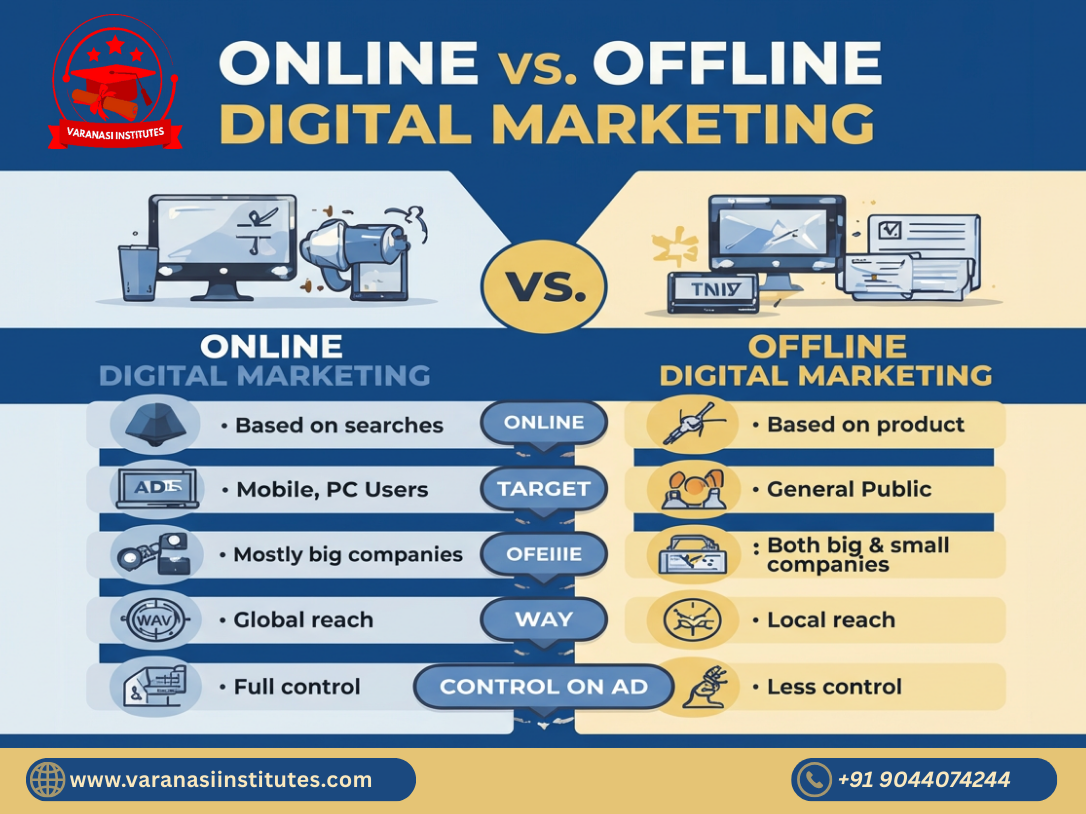
Difference Between Online and Offline Digital Marketing
| Feature | Online Digital Marketing | Offline Digital Marketing |
|---|---|---|
| Platform | Internet-based | Traditional & digital media |
| Reach | Global | Local/Regional |
| Cost | Low to medium | Medium to high |
| Tracking | Easy and accurate | Difficult |
| Control | Full control over ads | Limited control |
| Audience | Highly targeted | Mass audience |
Cost Comparison: Online vs Offline Digital Marketing
| Cost Factor | Online Marketing | Offline Marketing |
|---|---|---|
| Entry Cost | Low | Mid-High |
| Maintenance cost | Flexible | High |
| Ad modification costs | Easy and low cost | Expensive |
| Long-term Cost | Minimal-Low | High |
Which Is Better: Online or Offline Digital Marketing?
The choice depends on business goals and target audience:
- Online businesses and startups: Online marketing is more effective
- Local shops and events: Offline marketing works better
- Brand building: A combination of both delivers the best results
Conclusion
Both online and offline digital marketing play an important role in business growth. Online marketing offers global reach, flexibility, and measurable results, while offline marketing provides a strong local presence and customer trust.
By combining both approaches, businesses can maximize visibility, strengthen brand reputation, and achieve long-term success.
FAQs: – Related online and offline digital marketing.
Online and offline digital marketing examples
Offline digital marketing includes seeing ads on TV, hearing them on the radio, or finding paper ads like flyers or posters, while online digital marketing involves ads you see on websites, Twitter, Facebook, Instagram, YouTube, and YouTube Music.
Online vs offline digital marketing pdf
Online marketing uses internet-based platforms like social media, websites, and Google ads, while offline digital marketing relies on traditional channels such as TV, radio, newspapers, and banners.
Difference between online and offline digital marketing
Online digital marketing uses the internet (social media, websites, and Google ads) to reach people, while offline digital marketing uses traditional channels like TV, radio, newspapers, and banners.
Which is better: online or offline digital marketing?
Online marketing is cost-effective and measurable, while offline marketing builds strong local trust.
Important Link:
- Job Partner Website: – www.jobdo.in
- Get Computer Info: – www.computeritpoint.com
- AI Computer Courses for Website Development, Duration, Scope, Syllabus, Admission, Institutes & Jobs in VaranasiAI Computer Courses for Website Development, Duration, Scope, Syllabus, Admission, Institutes & Jobs in Varanasi Artificial Intelligence ने...
- Top 1 Best Digital Marketing Course Fee, Institute, Syllabus, JobsTop 1 Best Digital Marketing Course Fee, Institute, Syllabus, Jobs Top 1 Best Digital Marketing Course Fee, Institute, Syllabus, Jobs. This quantity is anticipated to develop quickly with the appearance of Digitalisation within...
- How to Make a Free WebsiteHow to Make a Free Website About VedantSri How to Make a Free Website How to Make a...